


Jade 101
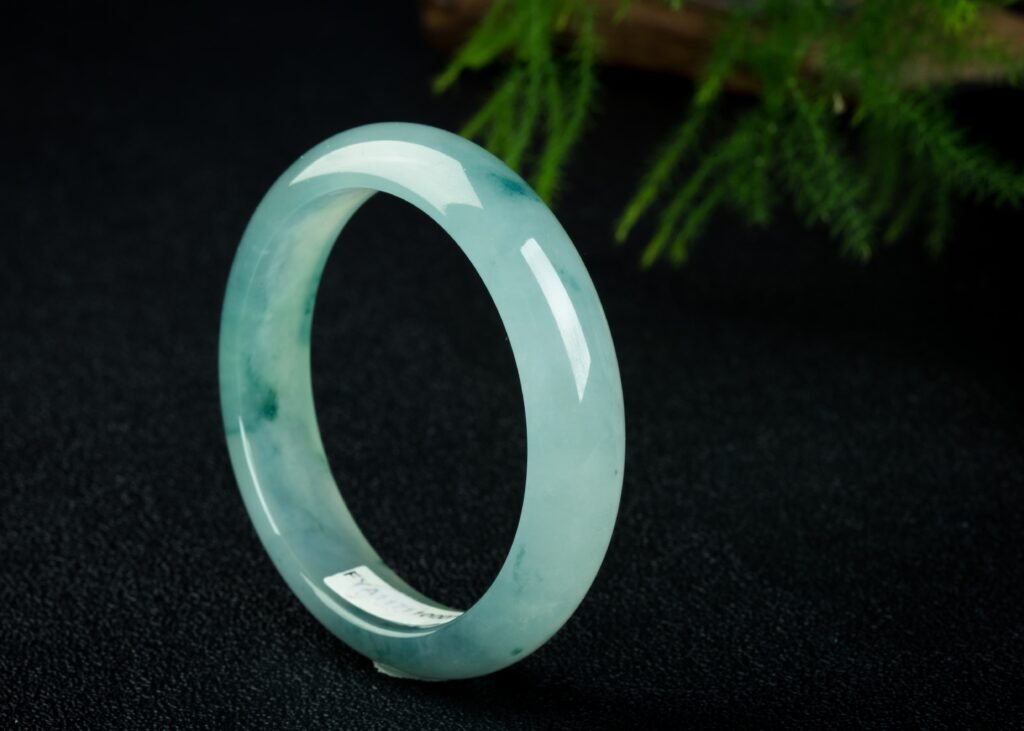
For over 7000 years, jade has been one of the most valued gemstones in different cultures around the globe. As opposed to diamonds, where value and beauty are measured through a set of standardized criteria, evaluating a given jade stone is more nuanced.
At Kim Quang, jade has been part of what we do since we opened our doors in 1981. In this guide, we’ll help give you a closer look at the gemstone. We’ll walk you through what to look for when selecting a stone and a few key factors that separate a good piece from an exceptional one.
What Is Jade?
So when we talk about jade, we’re actually referring to two different gemstones: jadeite and nephrite.
These two different gemstones differ in composition, appearance, and value.
Composition wise, jadeite is a sodium and aluminum rich silicate, whereas nephrite is a calcium and magnesium rich silicate.
Of the two, jadeite is rarer. Generally speaking, jadeite is the type that’s associated with the highest-value jade pieces. It can take a very high polish and show the vivid color and translucency collectors look for.
Nephrite is slightly softer and less dense than jadeite, but it is tougher (meaning that it can resist breaking upon impact pretty well). Before it was even used as jewelry, it was carved into tools and even weapons.
Whereas 90% of the world’s jadeite comes from Myanmar, nephrite is found all over. China, Russia, Canada, and the Western US are places where it’s commonly mined.
Both jadeite and nephrite are used in jewelry. As far as colors go, jadeite tends to come in a wider and more vivid color range. Green is the color most people associate with jade, but
Jadeite can also come in lavender, white, yellow, black, and other shades.
Nephrite, on the other hand, is usually seen in softer greens, whites, creams, and earthy tones.
Jadeite and Nephrite Formation
Jadeite is formed deep within the earth; its formation requires very high pressure, but relatively low to moderate temperatures.
It’s created through a geologic process associated with subduction, which, put simply, is a geological event where one tectonic plate gets pushed underneath another.
Being formed deep within the earth, after its creation it then requires other geological movements to bring it closer to the earth’s surface, where it can be mined.
This is the reason why jadeite is chiefly found in concentrated areas associated with subduction zones, and why it’s quite rare, and thus valuable.
Nephrite generally requires less pressure and forms when certain rocks are altered by heat and mineral-rich fluids.
These conditions occur in a wider range of geological settings, which is why nephrite can be found in more places around the world.
What Determines Jade's Value
Unlike diamonds, jade doesn’t get scored on a standardized grading system.
Instead, its value is based on a few different factors that experienced jewelers look at together.
Some of these carry more weight than others, but they all play their part.
Here’s what to consider when evaluating a piece.
Type and Treatment
One of the first things to consider is what kind of jade you’re actually looking at. As mentioned earlier, jadeite is rarer than nephrite, and thus is typically more expensive.
With this in mind, like with other gemstones, jade is often treated to enhance the appearance of lower-grade stones. Given nephrite’s abundance and relatively lower cost, it’s typically left untreated.
As far as the designation goes, jadeite can be labelled as Type A, B, or C, according to what treatment was done.
Type A
Type A jade refers to jadeite that has not been chemically treated. It may still receive traditional waxing during the polishing process. Type A doesn’t necessarily mean the jadeite is high quality, but the finest and most valuable jadeite pieces are generally Type A.
Type B
Type B jade refers to jadeite that has been chemically treated and infused with a polymer resin. The chemical treatment removes any impurities and unwanted discoloration within the stone.
When this is done, microscopic holes are left in the jade, which is why the stone is then infused with resin. Type B jadeite can look smooth and vibrant, but with the treatment done, its appearance can degrade over time.
Type C
Type C jadeite has been dyed to enhance or change its color. You may also come across B+C jadeite, which has undergone both the bleaching/polymer treatment associated with Type B and dyeing.
Color
Color is one of the most influential factors in determining jade’s value.
For jadeite, the most popular color is a vibrant emerald green known as “Imperial Jade.” Imperial jade is rare, and for the pieces that have a particularly evenly distributed color pattern, prices can be high.
For nephrite, the highest-valued pieces are the deep spinach greens or the pure creamy whites sometimes called “mutton fat” jade.
When evaluating color on any jade piece, look for:
- How deep the color is (saturation)
- Whether the color is uniform or splotchy across the piece (evenness)
Translucency
Translucency refers to the effect whereby light passes through jade and is dispersed within it, giving it a soft, inner glow.
Particularly with jadeite, the best pieces have a high degree of translucency and look almost as if they’re being lit from within.
Fully opaque jade, even with strong color, is less valuable.
You can get a rough idea of a piece’s translucency by holding it up to light.
If light diffuses softly through it, it is translucent. If it stops flat at the surface, the piece is opaque.
Texture
High-quality jade is smooth and has a uniform texture. A smooth texture not only feels nicer, but it allows a higher degree of polish so that the surface reflects light better and more evenly.
Lower-quality jade is coarse and has a grainy texture.
Running your fingers across a well-polished piece should feel almost silky.
Origin
Where a piece of jade comes from can influence its value, especially at higher price points.
For jadeite, Burmese material (from Myanmar) is the most historically prized. For nephrite, the white color variation known as “Hetian White” from China’s Xinjiang region has been the benchmark for thousands of years. Other origins like Guatemala for jadeite, or Canada and Siberia for nephrite, have their own markets and quality ranges.
When buying at any meaningful price point, ask about origin. A knowledgeable seller will be able to tell you where their material came from.
Clarity and Fractures
Like most natural gemstones, jade can contain inclusions, veins, and other internal characteristics.
What matters more are significant cracks or fractures. These can affect both the appearance and durability of the piece and, depending on their severity, can lower its value.
Size and Workmanship
All else being equal, larger pieces of high-quality jade are worth more per gram than smaller ones. That’s because large pieces of top-tier material are rare in the first place. This is akin to diamond carats; higher carat diamonds are significantly more valuable than lower carat ones, simply because the raw ore needed to product a higher carat stone is that much rarer.
Workmanship matters too. A skilled carving can add significantly to a piece’s value, especially on antique or heirloom jade where the artistry itself becomes part of what you’re paying for.
Buying Jade with Confidence
Jade is one of the more nuanced categories in fine jewelry. There’s a wider range of quality and value than you’ll find in most other gems, and a lot of the differences aren’t obvious to the untrained eye.
The best thing you can do when shopping for jade is to see it in person and work with a professional who knows the material.
That means someone who can identify treatment, evaluate color and translucency, source authentic pieces from reputable suppliers, and explain what you’re actually buying.
Our team in San Diego has been sourcing and selling jade since 1981.
If you’re considering a jade piece, whether it’s a bangle, a pendant, or something custom, we’d love to walk you through what’s available. We offer complimentary consultations at our showroom. Stop in today and experience the service and expertise that has made us San Diego’s jade experts for over 4 decades.