


A Guide to Gold Karats
When you’re shopping for fine jewelry, you’ll often come across the term karat.
Karat is a measurement of the purity of gold —not to be confused with carat, which measures gemstone weight.
In fine jewelry, gold is often mixed with other metals to enhance its durability and alter its color, giving birth to different karats, each with its own strengths and weaknesses.
Karats use a fraction of 24 parts to indicate the proportion of gold within a given piece of metal, with pure gold having 24 parts. Below is a table that compares the properties of gold at a few different popular purity levels.
| Karat | Gold % | Properties |
|---|---|---|
| 24K | 100% | Very soft |
| 22K | 91.70% | Softer than lower karats |
| 18K | 75% | Soft, more durable than 24K |
| 14K | 58.30% | Durable |
| 10K | 41.70% | Very durable, affordable |
Understanding gold purity is important for anyone interested in purchasing a piece of fine jewelry. In this guide, we’ll go over the popular karats typically seen in jewelry to see what makes each unique, so you can make an informed decision when purchasing your next gold piece.
24K Gold
24K gold is 100% pure. Pure gold has a bright, unmistakable yellow color and is particularly favored in Asian cultures, where it is traditionally associated with prosperity and luck.
At 100% purity, 24k gold is very malleable and ductile, meaning it can be shaped into intricate designs without breaking. This softness does come with some drawbacks. Pure gold pieces can be prone to scratching, bending, and deforming, making them less suitable for everyday wear.
Due to its high value and softness, 24K gold is often reserved for family heirlooms, collectible pieces, and ceremonial jewelry. The delicate nature of a pure gold jewelry piece requires careful handling and storage to maintain its appearance.
22K Gold
22K gold is composed of 22 parts pure gold, and 2 parts alloyed metal. This karat level leans towards pure gold while incorporating a small amount of alloyed metal to enhance durability. While not as bright as 24k gold, 22k gold has a rich warm yellow color and is a popular choice for high-end jewelry. It’s commonly seen in Indian and Middle Eastern jewelry pieces.
22K gold is more durable than 24K, but still much softer than lower karat gold and is not ideal for pieces that will be worn daily or for rough handling. Common uses are wedding bands and jewelry for special occasions. Consumers should know that while 22K gold can be a beautiful choice for elegant pieces, it may require more care to maintain its rich appearance.
18K Gold
At 75% gold content, 18K gold still has a rich yellow color and more durability. It’s one of the most popular choices for fine jewelry, including engagement rings and high-end necklaces. Its higher gold content makes it more hypoallergenic than lower-karat options and is a great choice for those who have sensitivities to certain alloy metals like nickel or copper.
18K gold can withstand daily wear better than 22K and 24K gold due to its alloy composition, which typically includes metals like copper and silver. This combination makes it much stronger while maintaining its beauty. However, it is still more prone to scratches than 14K or 10K gold. The luxurious look of 18K gold appeals to those who want a premium feel in their jewelry, yet still want a piece that can be used often.
14K Gold
With 58.3% gold content, 14K gold is one of the more popular choices for everyday jewelry, due to its durability and moderate price point. It’s a balance between gold purity and strength, suitable for engagement rings, wedding bands, and all-purpose jewelry that can withstand daily wear.
14K gold is used in a wide range of jewelry pieces, from delicate necklaces to robust bracelets. Its affordable price point and durability make it a good investment for those who want to buy quality jewelry that lasts.
10K Gold
At 41.7% gold purity, 10K gold is the least pure and the most affordable in this guide’s karat comparisons. 10K’s lower gold content makes it much more durable than higher-karat gold, and is perfect for fashion jewelry and pieces that will be worn more often. While durable, 10k gold is noticeably paler than its higher 18k and higher counterparts. This pale hue is due to the higher percentage of alloy metals used in its composition.
10K gold is ideal for those on a budget and is a great choice for those who want something dainty that can be replaced or updated easily. It’s found in many fashion pieces, including earrings, pendants, and bracelets. Due to its high alloy content, it may trigger allergic reactions in those who are sensitive to certain metals, such as nickel.
Colors of Gold
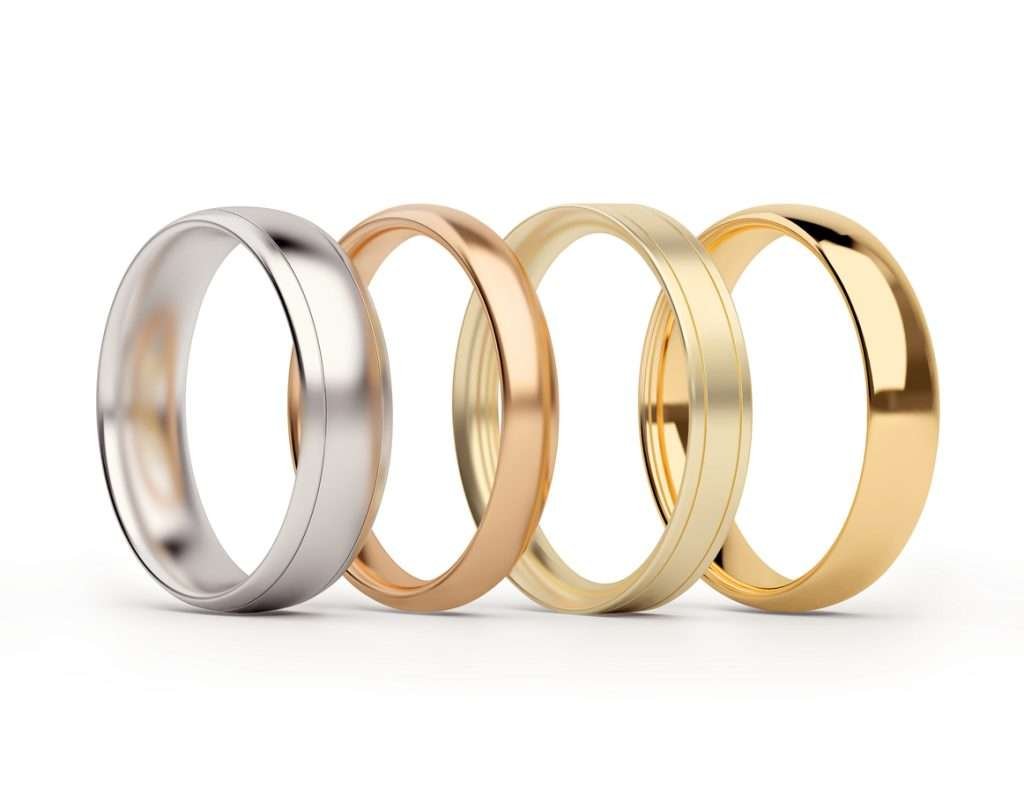
Gold can be alloyed with various metals to produce different colors, each with its own properties and appeal.
The most common gold colors are yellow, white, and rose gold. White and rose colors can be achieved by mixing gold with different alloy metals, and different hues of yellow can be achieved by doing the same. The karat level also plays a significant role in the final color of the piece.
- Yellow Gold:
In its purest form, gold carries that signature, bright yellow color. To achieve specific shades of yellow, and to make it more durable, pure gold is often alloyed with metals like copper and silver. The percentage of pure gold in the alloy determines the intensity of the yellow color—higher karat levels like 18K and 22K produce a deeper, more vibrant yellow while lower karats like 14K and 10K appear lighter due to the higher percentage of alloy metals.
- White Gold:
To achieve the sleek, silvery look of white gold, yellow gold is alloyed with metals like nickel, palladium, or silver. Nickel, though commonly used, can trigger allergic reactions for some. The karat level of white gold affects its color and durability. For instance, 14K white gold is more durable than 18k gold, but at the same time is less lustrous due to the increased amounts of other metals. White gold is often plated with rhodium, a precious metal that enhances its brightness and provides a scratch-resistant finish. Over time, the rhodium plating may wear off, and the piece may need to be replated to maintain its shine.
- Rose Gold:
Known for its romantic, pinkish color, rose gold is produced by mixing gold with copper. The more copper added to the alloy, the more pink the color. The karat level affects the overall color tone. 18K rose gold has more yellow in it and has a softer, subtler pink hue, while 14K rose gold is a bolder pink. This color has become popular in recent years, particularly in engagement rings and fashion jewelry. Rose gold is not only beautiful but also durable. Thanks to the strength of its copper, most rose gold pieces are suitable for everyday wear.
Summary: Choosing the Right Gold for You
When choosing a piece of gold jewelry, it helps to understand the differences between karats in order to make an informed decision.
As you decide, think about how each karat level fits your needs. If you lead an active lifestyle, you may consider getting a piece made out of 14k gold to stand daily wear. If you want a statement piece that exudes luxury, 18K or 22K gold may be what you’re looking for. Furthermore, if you know that you’re sensitive to certain alloy metals, perhaps considering a piece with higher purity would be the right decision.
Of course, the color of the gold is also an important, but personal deciding factor. The warm tone of yellow gold is classic and timeless, while the modern look of white gold or the romantic charm of rose gold can suit different styles and skin tones. By considering both the purity and color of gold, you can find pieces that not only fit your personal style but also the emotions and sentiments behind your jewelry choices.
At Kim Quang, our showroom features one of the largest collections of gold jewelry in all of San Diego. Our staff is here to help you navigate your options and understand the intricacies of gold purity and color so that your purchase is a treasured addition to your collection. Whether it’s white gold, rose gold, or yellow gold, we have gold pieces of all different colors and karats to fit your needs. Come visit us for a complimentary jewelry consultation, and see why we’ve become San Diego’s premiere destination for gold jewelry.